

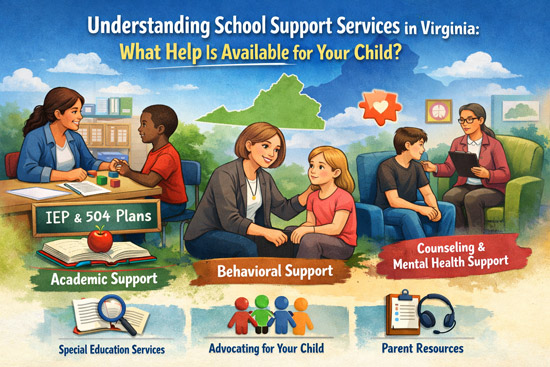
As a parent or guardian, ensuring that your child receives the support they need to succeed in school is one of your top priorities. For children facing academic challenges, behavioral difficulties, or emotional struggles, Virginia’s public and private schools offer a variety of services and resources to help them thrive. In this blog post, we’ll explore the academic, behavioral, and counseling support services available in Virginia schools, with a focus on advocating for necessary assistance, especially for children with special needs.
1. Academic Support: Helping Your Child Succeed in the Classroom
Virginia offers a range of academic support services for students, particularly those who may need extra help to meet grade-level expectations. Some of the common academic resources available to students include:
-
Special Education Services: Virginia’s public schools are required by law to provide special education services for students with disabilities under the Individuals with Disabilities Education Act (IDEA). Special education programs in Virginia are designed to provide students with tailored instruction, whether through smaller class settings or one-on-one support. The focus is on meeting each child’s unique needs to ensure that they can access the general curriculum and achieve their academic goals.
-
Virginia’s Response to Intervention (RTI): Many Virginia schools implement the Response to Intervention framework, which is designed to identify struggling students early and provide targeted interventions. RTI typically begins with high-quality classroom instruction, followed by tiered interventions. If a student continues to struggle, they may receive additional support such as tutoring, instructional accommodations, or more intensive small-group services.
-
504 Plans: A 504 Plan, named after Section 504 of the Rehabilitation Act of 1973, provides accommodations to students with disabilities to ensure equal access to education. In Virginia, students who need accommodations—such as extended time for tests, note-takers, or modified assignments—may have a 504 Plan developed to ensure their success in the classroom without modifying the core content of the curriculum.
-
Tutoring and Study Skills Programs: Many schools in Virginia provide after-school tutoring programs, often funded through state and federal grants. These programs help students who need extra help in subjects like math, reading, or science. Additionally, study skills programs are designed to teach students strategies for organizing their work, managing their time, and developing good study habits.
2. Behavioral Support: Addressing Behavioral and Social Needs
For students who struggle with behavior, Virginia schools offer various resources to ensure positive behaviors are reinforced and social skills are developed. Some of the most common behavioral support services include:
-
Behavioral Intervention Plans (BIP): If a student’s behavior disrupts their own learning or the learning of others, Virginia schools may develop a Behavioral Intervention Plan. This plan includes specific strategies to help the child understand and modify their behavior. It may involve setting clear expectations for behavior, using positive reinforcement techniques, and implementing tailored interventions.
-
School Counseling and Social Work Services: Virginia school counselors and social workers play an essential role in supporting students with behavioral and emotional difficulties. They provide individual or group counseling to help children cope with issues like stress, anger, or interpersonal conflicts. Virginia’s school social workers also assist families in connecting with local mental health resources, if necessary.
-
Positive Behavioral Interventions and Supports (PBIS): The Virginia Department of Education (VDOE) encourages schools to implement PBIS, a framework that emphasizes creating a positive school environment. PBIS focuses on teaching appropriate behavior, reinforcing positive actions, and providing interventions for students who need additional support in meeting behavioral expectations.
-
Social Skills Training: For students who struggle with communication or making friends, many Virginia schools offer social skills training programs. These programs help children develop essential social skills, such as understanding social cues, resolving conflicts, and learning how to work effectively in groups.
3. Counseling Support: Promoting Mental Health and Emotional Well-Being
Addressing a child’s mental health is critical to their overall success in school. Virginia recognizes the importance of providing emotional support, and many schools offer a variety of counseling services to meet the needs of students dealing with mental health challenges.
-
School-Based Counseling: In Virginia, school counselors provide counseling services to support students facing challenges like anxiety, depression, or family problems. School counselors work with students individually or in small groups to help them develop coping strategies, improve self-esteem, and enhance emotional resilience.
-
Crisis Intervention: Schools in Virginia are equipped to respond to mental health crises, such as suicidal thoughts or trauma. Virginia’s school crisis response teams, which include counselors, psychologists, and social workers, provide immediate assistance to students in crisis and work with families to connect them to necessary community resources.
-
Group Counseling and Support: Many schools in Virginia offer group counseling sessions to support students facing similar challenges. Topics for these groups might include dealing with bullying, managing grief, or learning how to navigate social challenges. Group counseling offers students the opportunity to connect with others who may share similar experiences, which can be both comforting and empowering.
4. The IEP Process in Virginia: Ensuring Tailored Support for Special Education Needs
In Virginia, Individualized Education Programs (IEPs) are critical for students with special needs. An IEP is a legally binding document that outlines specific educational goals, services, accommodations, and modifications based on a student’s individual needs. If your child has a disability and requires special education services, an IEP ensures they get the support necessary to succeed.
The process for obtaining an IEP in Virginia begins with a referral for evaluation. Once the evaluation is complete, the IEP team—which includes parents, teachers, school administrators, and specialists—meets to discuss the child’s strengths, challenges, and goals. Together, they develop an IEP that may include:
-
Specialized instruction in specific subjects
-
Accommodations such as extended time for tests, assistive technology, or modified assignments
-
Related services like speech therapy, occupational therapy, or behavioral support
-
Behavioral interventions, including a BIP for students who need support with behavior management
Parents in Virginia should be an active part of the IEP process, advocating for their child’s needs and ensuring the plan addresses their specific challenges. The Virginia Department of Education provides resources and guidance for parents to navigate the IEP process effectively.
5. Advocating for Your Child’s Needs in Virginia
If you feel your child is not receiving the support they need, advocating for their needs is crucial. Here are some steps you can take to ensure your child gets the help they deserve:
-
Know Your Rights: Familiarize yourself with both federal laws (like IDEA and Section 504) and Virginia-specific regulations that govern special education services. The Virginia Department of Education (VDOE) has a dedicated office for special education and can guide you through the state’s specific processes.
-
Document Everything: Keep records of all communications, evaluations, meetings, and decisions regarding your child’s education. This documentation is important when advocating for additional services or making changes to an IEP or 504 Plan.
-
Engage with School Staff: Attend meetings, including IEP and 504 meetings, and maintain open communication with teachers, counselors, and administrators. Building positive relationships with the school staff will help ensure your child’s needs are met.
-
Collaborate with Advocacy Groups: In Virginia, several advocacy groups support parents of children with disabilities. Organizations like The Virginia Parent Training and Information Center (PTI) and The Arc of Virginia offer resources, guidance, and even legal advice to help you navigate the education system and secure the appropriate services for your child.
Conclusion
Virginia schools provide a wide range of support services to help students with academic, behavioral, and emotional challenges. By understanding the resources available and being an active advocate for your child, you can help ensure they receive the support they need to thrive. Whether through special education programs, behavioral interventions, or counseling services, Virginia’s educational system is designed to support students and their unique needs.
If you’re navigating the process of securing an IEP or 504 Plan for your child or need help advocating for necessary support, Tuomey Law Firm is here to assist you. We understand the complexities of special education law and can guide you in protecting your child’s educational rights. Contact us today for assistance and to learn more about how we can help.
We can help individuals located in and surrounding these areas: Main Counties : Loudoun County, Prince William County, Fairfax County, Arlington County and Fauquier County.